
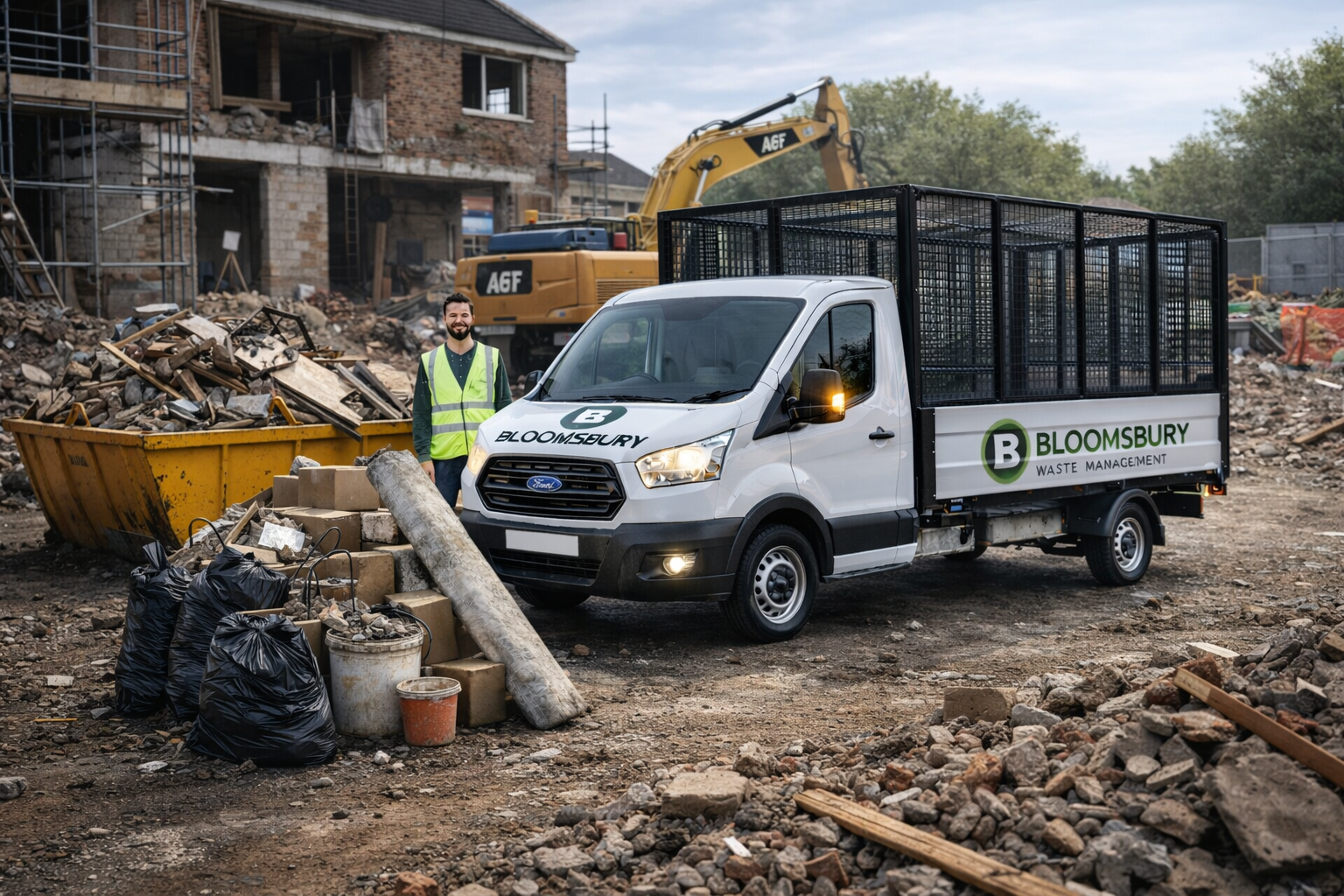
What Happens to Construction Waste After It Leaves Site?
Most people see waste leaving a construction site and assume the process ends there. In reality, removing waste is only the beginning of a much larger operation involving sorting, recycling, compliance, transportation, and environmental responsibility.
At Bloomsbury Waste Management, we work with homeowners, contractors, landlords and commercial clients across Brighton, Hove and Sussex to ensure waste is handled safely, legally and responsibly from collection through to disposal.
Construction and refurbishment projects generate huge volumes of material, and understanding where that waste actually goes is becoming increasingly important for both environmental and compliance reasons.
Construction Waste Is Rarely Just “Rubbish”
A modern construction site produces a wide range of waste streams, including:
- Timber
- Plasterboard
- Bricks and hardcore
- Metals
- Packaging
- Soil and rubble
- Plastics
- Mixed general waste
- Old fixtures and fittings
Each material may require different handling, recycling methods, or disposal routes.
Responsible waste management starts with identifying what can be reused, recycled, or recovered before anything reaches landfill.
The Collection Process
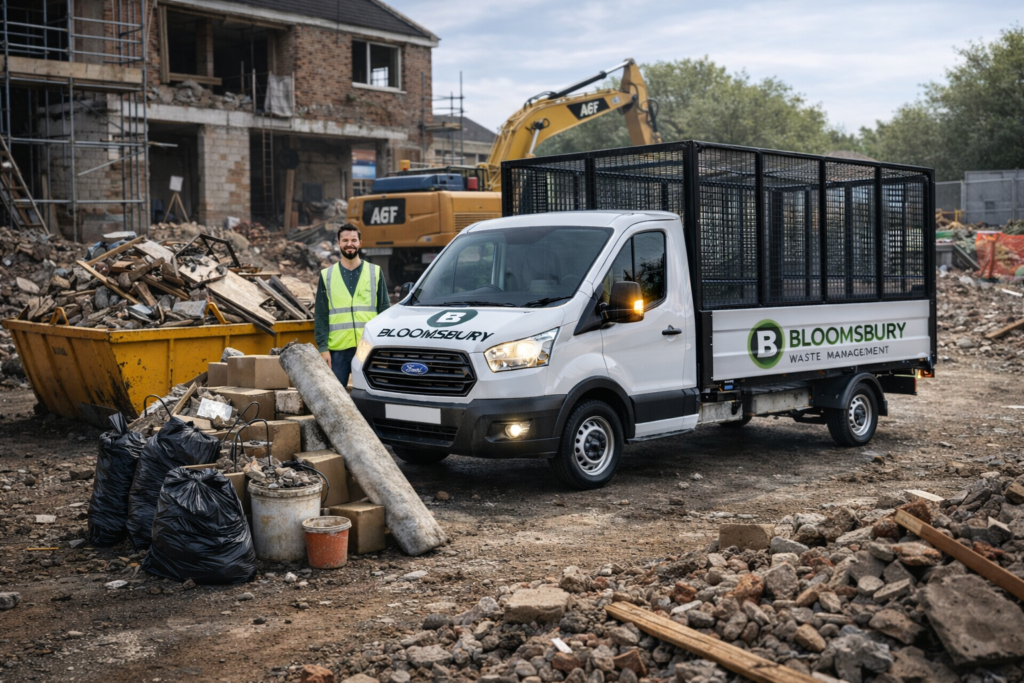
Once waste is removed from site, it is typically transported to a licensed waste transfer facility where materials are separated and processed.
At Bloomsbury Waste Management, all collections are carried out in line with waste carrier regulations and duty of care requirements.
This process is important because waste producers remain legally responsible for their waste even after it leaves site.
Using unlicensed carriers or unreliable operators can expose businesses and property owners to:
- Fly-tipping liability
- Environmental penalties
- Compliance breaches
- Project disruption
- Reputational damage
Choosing a properly licensed waste carrier is therefore essential.
Waste Sorting and Recycling
Once at the transfer station, waste materials are separated into categories.
Many construction materials can be recycled or repurposed, including:
- Metals
- Clean timber
- Concrete and hardcore
- Cardboard
- Certain plastics
- Green waste
Concrete and hardcore may be crushed and reused as aggregate. Scrap metals can be processed and recycled into new products. Timber may be repurposed or converted into biomass fuel depending on condition.
Modern waste management increasingly focuses on diverting as much material from landfill as possible.
Why Waste Segregation Matters on Site
One of the biggest issues within construction waste management is poor segregation onsite.
When recyclable materials become mixed with contaminated waste, recovery becomes more difficult and disposal costs often increase.
Simple site management measures can significantly improve recycling efficiency, including:
- Dedicated waste zones
- Separate skips for materials
- Clear signage
- Regular collections
- Staff awareness
Efficient waste handling also improves site safety by reducing clutter, trip hazards, and blocked access routes.
Environmental Responsibility Is Becoming Increasingly Important
Environmental performance is now a major consideration across the construction industry.
Clients, developers and local authorities are increasingly focused on:
- Recycling rates
- Sustainable construction practices
- Carbon reduction
- Responsible disposal
- Waste reporting
Waste management companies therefore play an important role in helping projects meet environmental objectives while maintaining operational efficiency.
Reducing unnecessary landfill usage is not only environmentally beneficial, but can also improve project organisation and reduce long-term costs.
Fly-Tipping Remains a Serious Problem
Unfortunately, illegal dumping remains a major issue across many parts of the UK.
Cheap, unlicensed operators may advertise low-cost waste clearance services while disposing of waste illegally to reduce costs.
This can lead to:
- Environmental damage
- Legal action
- Clean-up costs
- Harm to local communities
- Delays for construction projects
At Bloomsbury Waste Management, we provide fully licensed and insured waste removal services across Brighton & Hove and Sussex, helping clients remain compliant while ensuring waste is managed responsibly.
Waste Management Supports Efficient Construction Projects
Efficient waste handling is about far more than removing rubbish.
Reliable collections help:
- Keep sites operational
- Maintain safe working areas
- Reduce downtime
- Improve logistics
- Support programme sequencing
- Maintain professional site presentation
Poor waste management can quickly create access issues, delays, and safety risks, particularly on busy refurbishment or city-centre projects.
The Industry Is Continuing to Evolve
Construction waste management is changing rapidly as sustainability expectations increase across the industry.
Modern projects increasingly aim to:
- Reduce waste generation
- Improve recycling rates
- Reuse materials where possible
- Minimise landfill dependency
- Improve environmental reporting
As regulations and expectations continue evolving, professional waste management will remain a critical part of responsible construction practice.
For contractors, developers, landlords and homeowners alike, understanding what happens after waste leaves site is becoming more important than ever.


Leave a Reply