
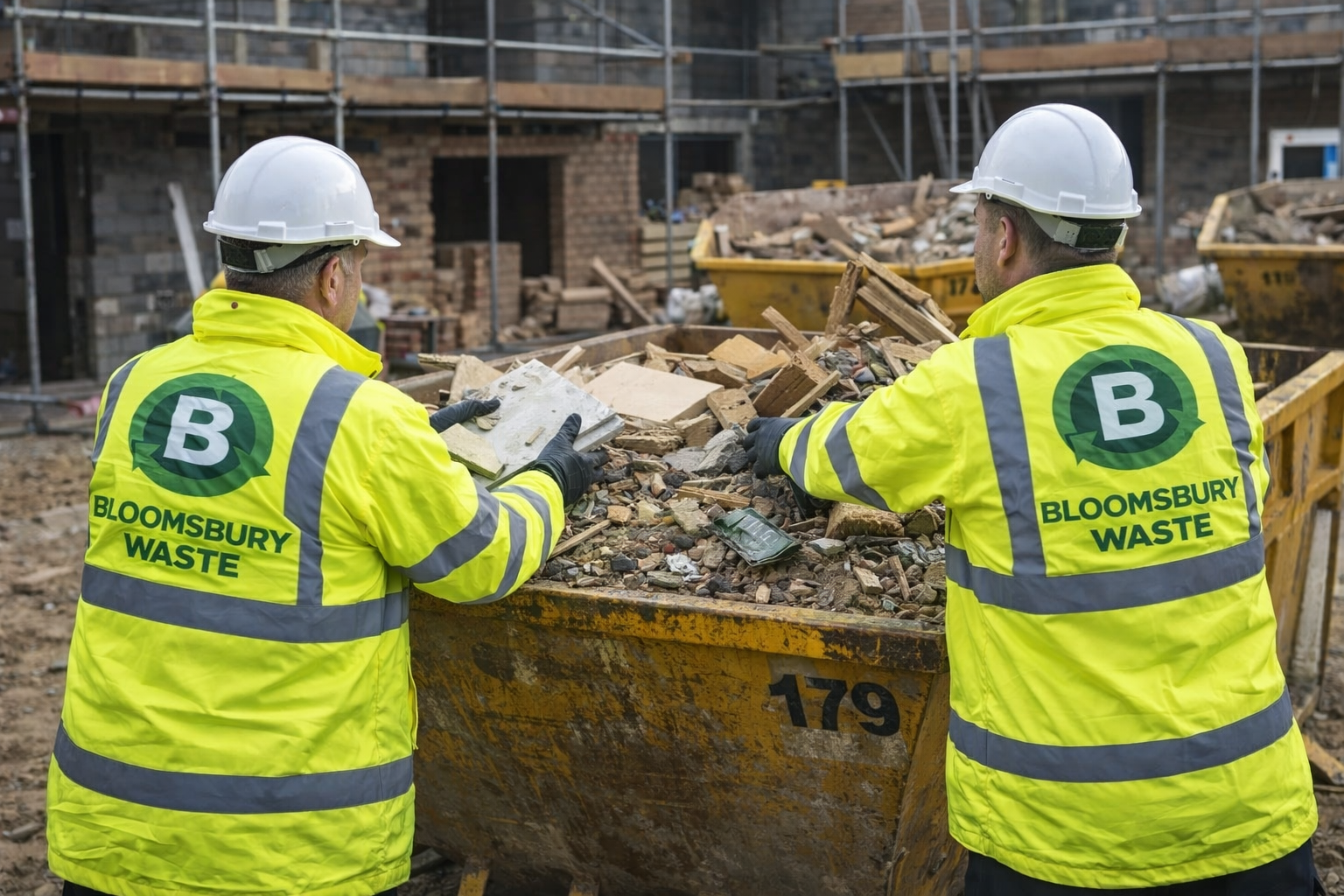
Why Professional Waste Management Matters on Construction and Refurbishment Projects
Construction and refurbishment projects generate significant volumes of waste, from demolition materials to packaging, timber, plasterboard, and general site debris. Managing this waste correctly is not just about keeping sites tidy. It is a legal requirement and an important part of responsible project delivery.
For contractors, developers, and property managers, professional waste management plays a key role in maintaining compliance, protecting the environment, and ensuring projects run efficiently.
Construction waste is more complex than many realise
Waste from construction projects is rarely just “rubbish”. Different materials require different handling, segregation, and disposal routes.
Typical construction waste streams include:
• Timber and joinery waste
• Plasterboard and gypsum products
• Metals and cabling
• Concrete and rubble
• Packaging materials
• General mixed waste
• Fixtures and fittings from strip-outs
Without proper planning, these materials can quickly create safety hazards, programme delays, and compliance risks.
Legal responsibilities for waste producers
Under UK waste regulations, businesses that produce waste have a legal Duty of Care to ensure it is stored, transported, and disposed of correctly. This includes using licensed waste carriers and maintaining proper documentation.
Failure to comply can result in fines, reputational damage, and potential liability if waste is disposed of incorrectly.
Working with a registered waste carrier ensures:
• Legal compliance
• Proper waste transfer documentation
• Traceable disposal routes
• Reduced risk of fly-tipping liability
• Environmentally responsible handling
Professional waste companies operate within regulations such as the Environmental Protection Act and Duty of Care requirements to ensure waste is handled correctly.
The operational benefits of structured waste removal
Efficient waste management does more than satisfy regulations. It improves how construction sites function day to day.
Well managed waste removal helps:
• Maintain safe working environments
• Reduce trip hazards
• Improve productivity
• Maintain professional site presentation
• Support programme efficiency
Regular collections and planned clearance strategies prevent waste from becoming an operational problem.
Sustainability is now a commercial expectation
Sustainability is no longer just a corporate ambition. It is now an expectation from clients, investors, and regulatory bodies.
Responsible waste management supports sustainability by:
• Increasing recycling rates
• Diverting waste from landfill
• Supporting reuse of materials
• Reducing environmental impact
• Supporting ESG objectives
Many construction clients now expect contractors to demonstrate environmental responsibility as part of procurement requirements.
Waste management as part of professional site management
Professional contractors understand that waste management should be planned from the beginning of a project rather than treated as an afterthought.
Best practice includes:
• Planning waste removal routes
• Scheduling collections around project phases
• Separating recyclable materials
• Maintaining clear access areas
• Using reliable licensed providers
This structured approach helps avoid reactive decisions that can increase costs and disrupt programmes.
Choosing the right waste management partner
Selecting a professional waste partner should be based on more than price alone. Reliability, compliance, and responsiveness are equally important.
Key considerations include:
• Licensing and insurance
• Experience with construction waste
• Fast response capability
• Clear pricing structures
• Environmental commitment
• Local knowledge
Reliable providers support both one-off clearances and ongoing waste removal programmes depending on project needs.
Supporting projects across Brighton and Sussex
With continued development across Brighton, Hove, and the wider Sussex region, construction waste management remains an essential part of keeping projects moving efficiently.
Professional waste removal providers support domestic, commercial, and construction projects through structured collection services, rapid clearances, and compliant disposal practices.
Conclusion
Effective waste management is a fundamental part of professional construction delivery. It protects contractors legally, supports environmental responsibility, and helps projects operate safely and efficiently.
By working with experienced, licensed waste professionals, developers and contractors can ensure their projects remain compliant, organised, and environmentally responsible from start to completion.



Leave a Reply